Pants Aren’t Real
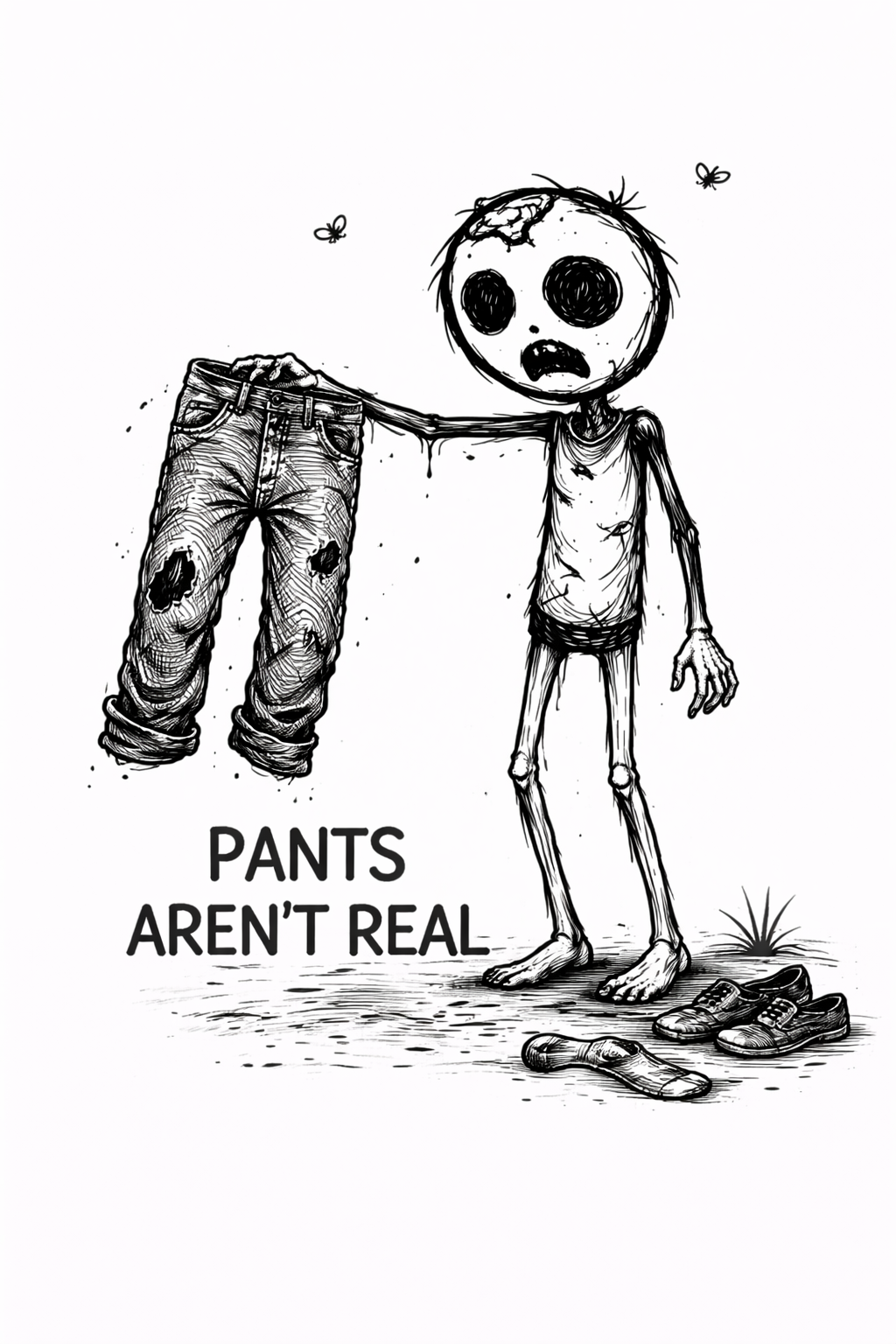
Pants are a suggestion that went too far.
At some point in history, a person looked at their legs and thought “These need rules.”
Not protection. Not warmth. Rules. And somehow, we all agreed. Pants aren’t real. They’re just fabric with authority issues.
Clothing Is the Original Social Lie
Clothing was not invented for self-expression. It was invented because people were cold and tired of being stared at. That’s it.
Early clothing existed to:
Keep bodies warm
Prevent sunburn
Reduce bug bites
Stop other humans from being deeply uncomfortable
Anthropologists agree that adornment came after utility. Style didn’t exist. Aesthetics didn’t exist. Fashion didn’t exist. There were no “looks.” There were no “vibes.” There were just bodies trying not to die. Then culture happened. Which is where things went off the rails.
The Moment Fabric Became a Personality
Somewhere along the way, clothing stopped being about survival and became about status. Pants were no longer just leg tubes. They were symbols of:
Wealth
Gender
Class
Profession
Morality
Respectability
Historian Thorstein Veblen called this conspicuous consumption — wearing things not for function, but to signal value. Translation: Your pants are a résumé.
The wrong pants mean:
You’re unprofessional
You’re immature
You’re not serious
You’re “asking for attention”
The right pants mean:
You deserve to speak
You belong here
You’re safe from judgment (mostly)
None of this is about the pants.
Style Is Just Peer Pressure With a Mood Board
People love to say “style is personal.” That’s adorable. Style is group behavior. You don’t dress in a vacuum. You dress in response to:
Trends
Norms
Subcultures
Fear of being noticed for the wrong reason
Sociologist Georg Simmel explained fashion as a cycle of imitation and differentiation — we dress to fit in and stand out, never achieving either. So you wear what’s acceptable. Then slightly different. Then acceptable again. Style is a dance where everyone pretends they’re freestyling.
Dress Codes: The Fabric Police
Dress codes are the clearest proof pants aren’t real. Think about it. A dress code says: “Your competence depends on leg fabric.”
Schools suspend children over shorts. Jobs deny promotions over denim. Restaurants decide whether you’re “allowed” inside based on shoes. Anthropologist Mary Douglas studied purity rules and social order, noting that dress codes are less about cleanliness and more about control. Dress codes don’t exist to maintain standards. They exist to maintain hierarchy. They tell you: Who’s in charge, Who belongs, Who must change
The body is neutral. The pants decide. “Professional attire” is one of the greatest scams ever sold. There is no universal professional look. There is only what powerful people decided looked trustworthy. Business suits became standard not because they were practical, but because they mirrored military uniforms and aristocratic dress. Authority with buttons.
Sociologist Pierre Bourdieu described this as cultural capital — knowing which signals unlock which rooms. So you dress “professionally” to say:
“I understand the rules.” “I know the code.” “I won’t disrupt the illusion.” You are not competent because of your pants. You are competent despite them.
Casual Friday Was a False Victory
Casual Friday was supposed to free us. It didn’t. It just introduced new anxiety. Now instead of: “Wear the uniform.” We have: “Dress casually, but correctly.” Which is worse. Now you have to decode:
How casual is too casual?
Are these jeans acceptable jeans?
Is this shirt relaxed or disrespectful?
Do these shoes say “creative” or “unemployed”?
The rules didn’t disappear. They multiplied.
Fashion Trends Are Just Collective Amnesia
Every few decades, fashion resurrects something embarrassing and pretends it’s new. Bell bottoms. Crop tops. Low-rise jeans. Cargo pants (somehow again).
Fashion historian Elizabeth Wilson described fashion as “organized forgetting.” We forget why we hated something. We call it retro. We repeat the cycle. Style isn’t progress. It’s a vicious cycle.
The Emotional Cost of Made-Up Clothing Rules
Here’s what pants culture costs us:
Comfort
Playfulness
Self-trust
Experimentation
Joy
People spend hours stressing over what to wear, what it means, what it signals, whether it’s “appropriate.” All for a system that changes constantly and rewards conformity. You’re not confused. The rules are. Then the pandemic happened.
Suddenly:
Sweatpants were acceptable
Pajamas were productivity gear
No one died because you wore elastic waistbands
The world didn’t collapse. Work still happened. People remained competent. The illusion cracked. And instead of learning from it, we rushed back into stiff pants like nothing happened.
What Happens When You Stop Believing in Pants
When you stop believing in the meaning of clothes:
You dress for function
You dress for comfort
You dress for curiosity
You stop outsourcing identity to fabric
You realize: Your value doesn’t change with denim weight. Your intelligence isn’t sewn into seams. Your seriousness is not located near your belt.
Pants Aren’t Real
But bodies are. Movement is. Expression is. Comfort is. Time is. The fabric rules were invented by people who wanted order. You don’t owe them your legs. Wear what lets you:
Think clearly
Move freely
Breathe deeply
Exist honestly
Everything else is costume.