Motivation isn’t Real.
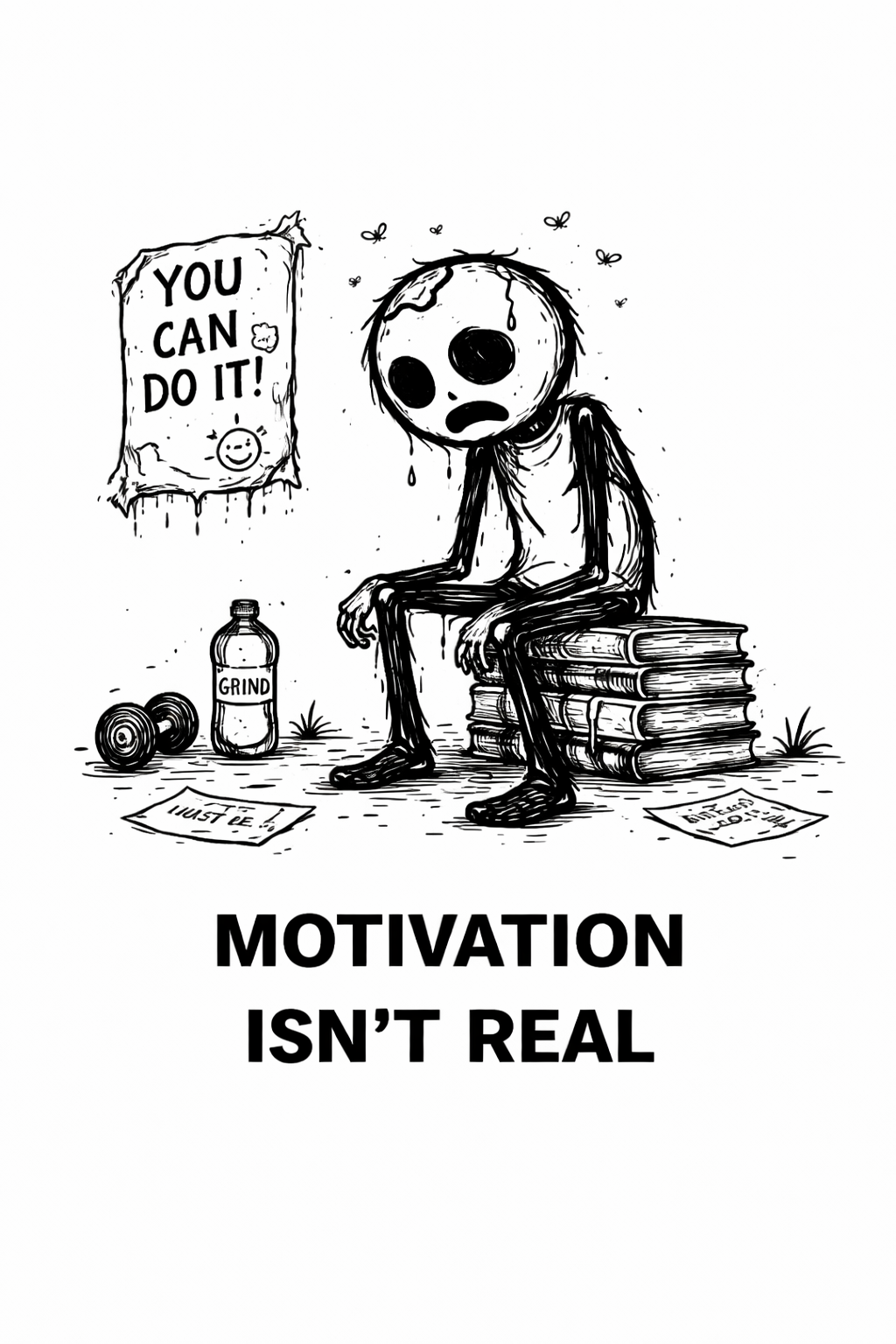
Motivation Isn’t Real
Somewhere on the internet, a very confident person is explaining motivation to millions of people. They’re standing on a mountain, or a stage, or next to a whiteboard covered in arrows and triangles that look like the diagrams of someone who discovered caffeine and decided to invent philosophy. They speak with urgency and certainty and they explain that success belongs to the motivated.
All you have to do is wake up inspired.
Wake up driven, focused, and ready to conquer your goals with the emotional intensity of someone about to storm a medieval castle.
But motivation isn’t real.
What’s real is energy, habit, boredom, curiosity, discipline, fear, stubbornness, caffeine, and occasionally the quiet realization that if you don’t start doing something soon you might end up reorganizing your sock drawer again just to feel productive. Motivation, however, is mostly a mood, and moods are notoriously unreliable employees. The strangest part is that we built an entire culture around waiting for motivation to appear before doing anything difficult. We treat it like a rare weather event. If motivation arrives, we sprint into action but if it doesn’t, we assume the day simply wasn’t meant for progress.
The Myth of the Spark
The idea of motivation usually arrives in the form of a spark. A sudden burst of emotional clarity where everything makes sense, where you feel focused and unstoppable. The path ahead looks obvious and exciting and you open your laptop with the confidence of someone who believes this is the moment their entire life begins to transform.
And sometimes that works.
You write the first chapter or sign up for the gym. You reorganize your finances. For a few hours, you feel like the most competent version of yourself imaginable. Then Tuesday happens and the spark fades, the energy evaporates, and the project that felt exciting yesterday now looks suspiciously like work. Suddenly your brain remembers seventeen other things it would rather do, including activities that were previously unthinkable like cleaning the refrigerator or reading the terms and conditions of a software update.
That’s is where the myth of motivation collapses. If motivation were real in the way we imagine it, it would be consistent. It would show up when needed, like a reliable assistant who hands you energy whenever you face something difficult. Instead it behaves like a cat, appearing when it wants, disappearing without explanation, and sometimes staring directly at you while you struggle and still refuses to help.
People say things like, “I just need to get motivated.” As if motivation is something you can download once and then install permanently into your personality. But motivation is emotional momentum, and emotional momentum is temporary.
The Productivity Theater
The internet is full of motivation because motivation sells beautifully. Motivational videos, podcasts, and quotes printed on minimalist posters next to photographs of mountains that nobody in the photograph actually climbed. The message is always the same: you can achieve extraordinary things if you just become motivated enough. And it sounds empowering, suggesting that the missing ingredient between where you are and where you want to be is emotional intensity.
This creates a bit of a problem, emotional intensity is unstable. No one feels driven every day. No one wakes up permanently inspired. Even people who accomplish extraordinary things experience long stretches where they feel bored, uncertain, or mildly annoyed that the project they started still exists.
The difference is that they continue anyway, not waiting for motivation to appear, they start working.
This is the part motivational culture quietly avoids mentioning. Most meaningful work happens during periods when you don’t feel particularly motivated. It happens when the initial excitement has faded and the only thing left is repetition. Practice. Revision. Iteration.
The most important word in the Nike “Just Do It” isn’t Do, it’s Just.
The Real Engine: Momentum
The secret behind most progress isn’t motivation, it’s momentum. Momentum works in the opposite direction of motivation. Motivation begins with emotion and hopes it leads to action. Momentum begins with action and eventually creates emotion.
You start by doing something small.
You write one paragraph, take a short walk, organize a single file. None of these actions feel particularly heroic. They feel ordinary, almost insignificant. But the moment you begin, something interesting happens. Your brain updates its internal model, and you’re no longer someone who is thinking about doing the thing, you’re someone who is currently doing the thing. That subtle shift changes how your mind interprets the task.
Momentum grows quietly, and once momentum exists, motivation sometimes shows up later like a friend who heard the party already started. This is backwards from how people usually imagine it. They assume motivation must appear first, waiting for the feeling of readiness before taking action. But readiness is often a side effect of starting, most progress begins reluctantly.
The Myth of the Inspired Life
The fantasy version of productivity looks like this:
You wake up excited, feel energized about your goals, with every task feeling meaningful. You work with enthusiasm and clarity for hours at a time, and at the end of the day you feel accomplished and satisfied. Occasionally that happens, but most days look different.
Most days involve starting something without enthusiasm, continuing something while mildly distracted, fixing mistakes and trying again. Doing the same task repeatedly until improvement becomes visible. The work that produces results rarely looks glamorous while it’s happening, it looks ordinary. That ordinariness is exactly why motivation struggles to survive there. Motivation prefers novelty, it likes beginnings and loves the dramatic announcement that something new is starting.
Progress, however, lives in the middle. The middle is repetitive, slow, and where most people lose interest because the emotional reward hasn’t appeared yet. Motivation loves the beginning of projects, but discipline is the one still there when the project turns out to be harder than the motivational speaker said.
Discipline is often described as the opposite of motivation, but that’s not quite right. Discipline is what happens when you stop negotiating with your moods. Instead of asking yourself whether you feel motivated today, you simply begin the task. The decision was already made, the debate is over, and your emotional state is allowed to exist, but it is no longer the authority determining your behavior. That might sound intense, but it’s actually liberating. When motivation is in charge, every task requires a negotiation. You’re constantly evaluating whether you feel ready, inspired, energized enough to begin. If the answer is no, the task moves to tomorrow, and tomorrow becomes a crowded place.
Discipline removes the negotiation entirely. The task exists, so you begin it. Some days the work feels easy and some days it feels difficult. Either way, the process continues. Over time the work accumulates, and that accumulation creates results, and those results sometimes generate the feeling people were waiting for all along.
The Joshua Palms Perspective
The Joshua Palms view of motivation is simple: motivation is a visitor, not a manager. It shows up occasionally, brings excitement, and makes the beginning of things feel electric. When it appears, enjoy it and ride the wave. Start something new while the energy exists, but don’t build your life around waiting for it. Most meaningful work will happen when motivation is somewhere else entirely. It will happen when you feel ordinary, tired, distracted, or mildly annoyed that the task still needs to be done. The myth of motivation convinces people they are broken when the feeling disappears when in reality, the feeling was never meant to stay.